


Stay ahead with the latest tech breakthroughs, industry trends, and cutting-edge news on our Innovation Feed channel.
https://samirb.com.np/
https://samirb.com.np/
#AI #ChatGPT #YearInReview
ChatGPT Launches a Year-End Review Like Spotify Wrapped
OpenAI's ChatGPT is rolling out "Your Year with ChatGPT," a fun, personalized recap of your 2025 interactions, inspired by Spotify Wrapped's catchy vibes.
This lightweight feature hands out custom "awards" like "Creative Debugger" based on your chats, plus a poem and image tailored to your interests—keeping things privacy-focused with opt-in controls.
Key highlights
⦁ Available now to free, Plus, and Pro users in the US, UK, Canada, Australia, and New Zealand who enable chat history and memories—no teams or enterprises yet.
⦁ Access it via the app home screen, web, iOS/Android, or just ask ChatGPT directly; it's not auto-launched to respect your space.
⦁ Highlights top topics, habits, and styles without sharing data externally, making it a shareable reflection on how AI boosted your year.
⦁ Teases future expansions, especially with ChatGPT's 2026 adult content support, for even wilder personal summaries.
⦁ Perfect for tech enthusiasts: It's a clever way to visualize AI usage patterns and spark ideas for next year's prompts.
Read More: TechCrunch Article
ChatGPT Launches a Year-End Review Like Spotify Wrapped
OpenAI's ChatGPT is rolling out "Your Year with ChatGPT," a fun, personalized recap of your 2025 interactions, inspired by Spotify Wrapped's catchy vibes.
This lightweight feature hands out custom "awards" like "Creative Debugger" based on your chats, plus a poem and image tailored to your interests—keeping things privacy-focused with opt-in controls.
Key highlights
⦁ Available now to free, Plus, and Pro users in the US, UK, Canada, Australia, and New Zealand who enable chat history and memories—no teams or enterprises yet.
⦁ Access it via the app home screen, web, iOS/Android, or just ask ChatGPT directly; it's not auto-launched to respect your space.
⦁ Highlights top topics, habits, and styles without sharing data externally, making it a shareable reflection on how AI boosted your year.
⦁ Teases future expansions, especially with ChatGPT's 2026 adult content support, for even wilder personal summaries.
⦁ Perfect for tech enthusiasts: It's a clever way to visualize AI usage patterns and spark ideas for next year's prompts.
Read More: TechCrunch Article

#AI #MusicTech #DataLeak
Spotify Leak Rumour: 256M Songs, But Who Has 300TB Storage?
A massive alleged scrape of Spotify's library by pirate activists has sparked buzz, but downloading 300TB of music data is a logistical nightmare for most.
Pirate group Anna’s Archive claims to have extracted metadata for 256 million tracks and 86 million audio files, totaling around 300TB, as a "preservation archive" shared via torrents.
Key highlights
⦁ The release covers 99.6% of Spotify listens, sorted by popularity, with metadata already out and audio files rolling out in stages—think playlists and extras coming soon.
⦁ Reality check: Grabbing this beast requires insane storage, bandwidth, and hardware; it's not a quick binge like your next Arijit Singh playlist.
⦁ Spotify's probing the breach, blaming third-party scraping of public data plus DRM bypass for audio access—no user accounts hit yet.
⦁ Bigger picture: This challenges streaming giants' control, but raises legal red flags for downloaders amid piracy crackdowns.
⦁ For tech fans, it's a wild reminder of data scale in music—perfect for debating open access vs. artist rights.
Read More: Siasat Daily Article
Spotify Leak Rumour: 256M Songs, But Who Has 300TB Storage?
A massive alleged scrape of Spotify's library by pirate activists has sparked buzz, but downloading 300TB of music data is a logistical nightmare for most.
Pirate group Anna’s Archive claims to have extracted metadata for 256 million tracks and 86 million audio files, totaling around 300TB, as a "preservation archive" shared via torrents.
Key highlights
⦁ The release covers 99.6% of Spotify listens, sorted by popularity, with metadata already out and audio files rolling out in stages—think playlists and extras coming soon.
⦁ Reality check: Grabbing this beast requires insane storage, bandwidth, and hardware; it's not a quick binge like your next Arijit Singh playlist.
⦁ Spotify's probing the breach, blaming third-party scraping of public data plus DRM bypass for audio access—no user accounts hit yet.
⦁ Bigger picture: This challenges streaming giants' control, but raises legal red flags for downloaders amid piracy crackdowns.
⦁ For tech fans, it's a wild reminder of data scale in music—perfect for debating open access vs. artist rights.
Read More: Siasat Daily Article

#AI #Education #TechImpact
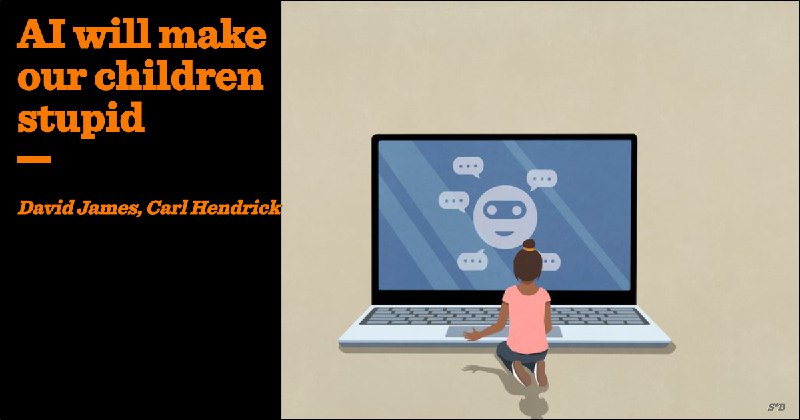
AI Will Make Our Children Stupid
As AI tools become everyday companions for kids, they risk stunting critical thinking and creativity by doing the mental heavy lifting for them.
The article warns that over-reliance on AI for homework, problem-solving, and even basic reasoning could leave a generation unable to think independently, much like calculators diminished mental math skills.
Key highlights
⦁ AI chatbots provide instant answers, discouraging kids from grappling with complex ideas or developing perseverance in learning.
⦁ Early exposure might weaken social skills, as virtual interactions replace messy, real human connections essential for empathy and collaboration.
⦁ Without thoughtful integration, AI could widen educational gaps, benefiting those with guidance while leaving others passive consumers of tech.
⦁ Authors urge parents and educators to prioritize human-led teaching to foster genuine intelligence over algorithmic shortcuts.
⦁ Long-term, this could reshape society, producing innovative users of AI but fewer original thinkers.
Read More: The Critic on AI and Kids
AI Will Make Our Children Stupid
As AI tools become everyday companions for kids, they risk stunting critical thinking and creativity by doing the mental heavy lifting for them.
The article warns that over-reliance on AI for homework, problem-solving, and even basic reasoning could leave a generation unable to think independently, much like calculators diminished mental math skills.
Key highlights
⦁ AI chatbots provide instant answers, discouraging kids from grappling with complex ideas or developing perseverance in learning.
⦁ Early exposure might weaken social skills, as virtual interactions replace messy, real human connections essential for empathy and collaboration.
⦁ Without thoughtful integration, AI could widen educational gaps, benefiting those with guidance while leaving others passive consumers of tech.
⦁ Authors urge parents and educators to prioritize human-led teaching to foster genuine intelligence over algorithmic shortcuts.
⦁ Long-term, this could reshape society, producing innovative users of AI but fewer original thinkers.
Read More: The Critic on AI and Kids
#AI #Programming #DevTools
Using AI Generated Code Will Make You a Bad Programmer
Relying too heavily on AI for code generation can erode core programming skills, turning devs into copy-paste experts instead of thoughtful builders.
⦁ AI tools like Copilot spit out quick fixes, but they often produce bloated, insecure code that ignores edge cases and best practices.
⦁ Over time, devs skip learning fundamentals, leading to unmaintainable projects riddled with subtle bugs from unvetted AI outputs.
⦁ It fosters laziness: Why understand algorithms when AI handles it? This hurts debugging and innovation in real-world scenarios.
⦁ Privacy risks loom large—AI ingests your code, potentially leaking proprietary logic without you realizing.
⦁ Balance is key: Use AI for boilerplate, but always review and refactor to build true expertise.
Read More: Rudi's Unsolicited Opinions
Using AI Generated Code Will Make You a Bad Programmer
Relying too heavily on AI for code generation can erode core programming skills, turning devs into copy-paste experts instead of thoughtful builders.
⦁ AI tools like Copilot spit out quick fixes, but they often produce bloated, insecure code that ignores edge cases and best practices.
⦁ Over time, devs skip learning fundamentals, leading to unmaintainable projects riddled with subtle bugs from unvetted AI outputs.
⦁ It fosters laziness: Why understand algorithms when AI handles it? This hurts debugging and innovation in real-world scenarios.
⦁ Privacy risks loom large—AI ingests your code, potentially leaking proprietary logic without you realizing.
⦁ Balance is key: Use AI for boilerplate, but always review and refactor to build true expertise.
Read More: Rudi's Unsolicited Opinions
#AI #Privacy #ImageGen
DuckDuckGo Launches Privacy-First AI Image Generator
DuckDuckGo just dropped a new AI tool that lets you create images without compromising your privacy—perfect for techies tired of data-hungry alternatives.
Key highlights
⦁ Powered by OpenAI but with anonymized prompts: No user data trains the model, keeping your inputs private.
⦁ Images generate and store locally on your device, not on servers, with C2PA metadata to verify they're AI-made.
⦁ Free to use at duck.ai with daily limits; paid subscribers get higher quotas for more creative freedom.
⦁ Stands out in a crowded field against Google's Imagen and OpenAI's updated ChatGPT Images by prioritizing privacy over everything.
⦁ Easy start: Just head to duck.ai, pick "New Image," enter a prompt, and generate—ideal for quick, secure prototyping.
Read More: DuckDuckGo AI Images
DuckDuckGo Launches Privacy-First AI Image Generator
DuckDuckGo just dropped a new AI tool that lets you create images without compromising your privacy—perfect for techies tired of data-hungry alternatives.
Key highlights
⦁ Powered by OpenAI but with anonymized prompts: No user data trains the model, keeping your inputs private.
⦁ Images generate and store locally on your device, not on servers, with C2PA metadata to verify they're AI-made.
⦁ Free to use at duck.ai with daily limits; paid subscribers get higher quotas for more creative freedom.
⦁ Stands out in a crowded field against Google's Imagen and OpenAI's updated ChatGPT Images by prioritizing privacy over everything.
⦁ Easy start: Just head to duck.ai, pick "New Image," enter a prompt, and generate—ideal for quick, secure prototyping.
Read More: DuckDuckGo AI Images